Dajulong Flooring: Merging Cultural Heritage & Intelligent Tech at Fuzhou Urban Planning Exhibition Hall
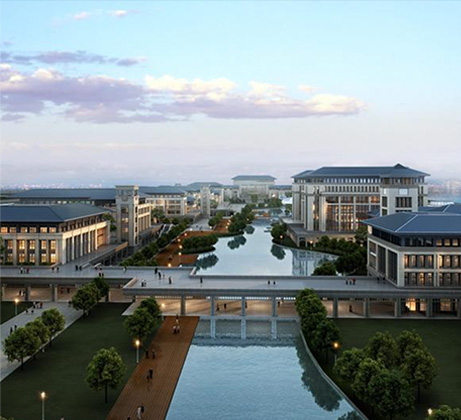
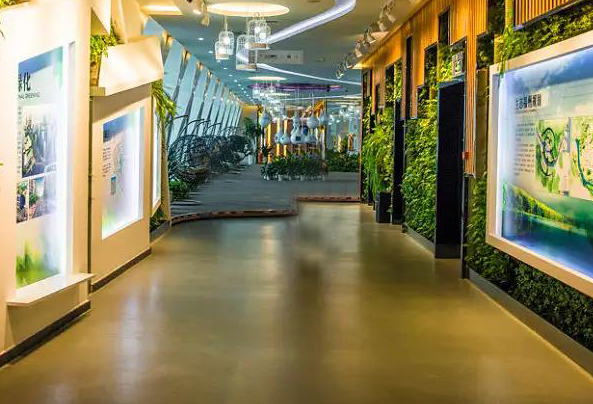
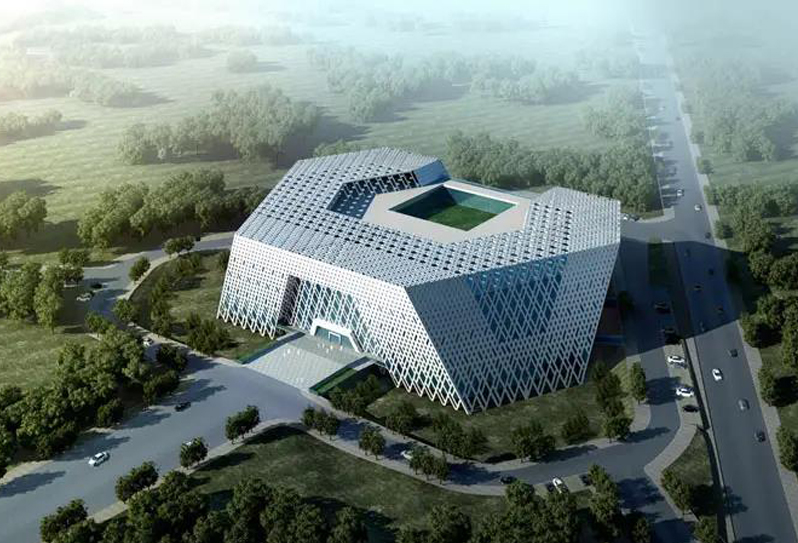
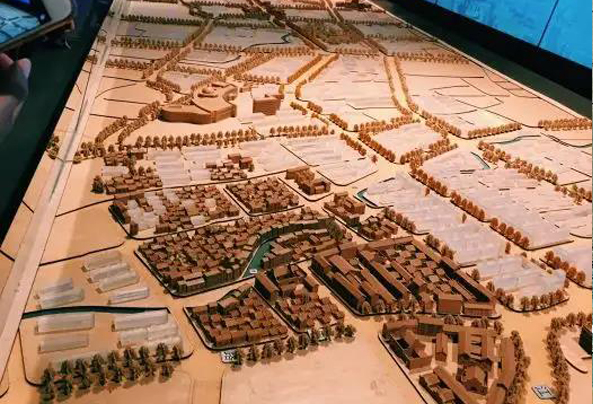
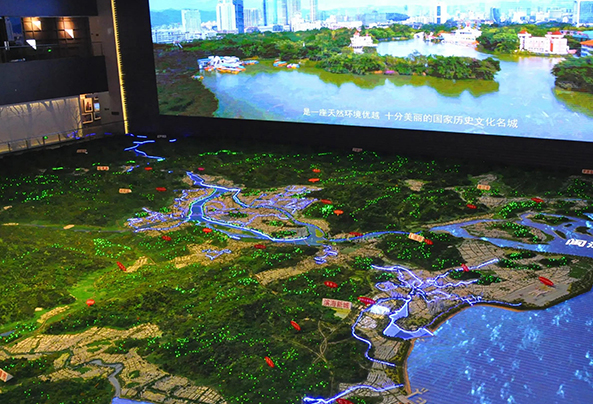
Perched along the Minjiang River, Fuzhou Urban Planning Exhibition Hall weaves the city’s 2,200-year history—from ancient Minyue City to the digital age—around the spatial narrative of "Three Mountains, Two Pagodas and One Street." When undergoing renovation in 2024, the hall proposed a bold concept: "the floor as an exhibition board." The 18,000-square-meter flooring system needed to withstand daily trampling by 5,000 student visitors while subtly showcasing Fuzhou’s cultural symbols, such as bodiless lacquerware, saddle walls, and goldfish scale patterns. Dajulong Flooring secured the project with its "technology awakening cultural DNA" solution, pioneering the transformation of traditional city motifs into functional, intelligent flooring language.
The project tackled unique challenges by balancing mechanical performance and cultural coding. A key dilemma emerged: the sand table area required flooring to support 3-ton digital projection equipment, while the historical exhibition zone demanded 0.1 mm-precision reproduction of lacquerware patterns. Traditional stone flooring met strength needs but lacked micro-carving capabilities, while epoxy flooring allowed customization but suffered poor weather resistance. Dajulong’s R&D team addressed this with a "composite structure gradient design": the equipment passage area uses 2mm-thick multi-layer composite PVC flooring with a fiberglass reinforcement layer, boasting a compressive strength exceeding 60 MPa—150% higher than national standards. For the cultural exhibition area, a 0.8mm ultra-thin printing layer integrated with nano-embossing technology replicates the texture of bluestone slabs from Three Lanes and Seven Alleys with ±0.05 mm line precision, on par with high-end screen printing.
Light environment optimization was another critical task. To complement the hall’s 270° panoramic projection, the floor needed a light reflectivity of 18%–22%. After 200 laboratory tests, Dajulong incorporated basalt particles into the UV coating, stabilizing the matte index at 0.2–0.3 GU. This eliminates light pollution while preserving the patterns’ three-dimensionality.
Dajulong also introduced an "intelligent flooring system" with triple digital functions: Piezoelectric sensors in the waiting area generate real-time pedestrian heat maps, optimizing tour routes and boosting peak-hour visiting efficiency by 35%. NFC chips in the intangible cultural heritage zone trigger AR scenes when visitors step on specific patterns, recreating historical events like Lin Zexu’s Destruction of Opium in Humen. Additionally, temperature-controlled flooring using phase change energy storage materials stores winter floor heating waste heat and releases cooling in summer via capillary pores, cutting the hall’s annual energy consumption by 28%.
To modernize traditional patterns, Dajulong built a dual "culture-materials" database. The pattern database features over 100,000 vector graphics—laser-scanned from bodiless lacquerware relics and refined via AI denoising and reconstruction for seamless flooring application. The process database introduced a "hot pressing-cold carving" method: basic textures are shaped at 160℃, then instantly cooled with liquid nitrogen for detailed carving, controlling embossing depth error within ±5 μm.
The project yielded 37 patents, driving the compilation of Technical Guidelines for Digital Flooring of Cultural Heritage, with "Specifications for Non-contact Extraction of Cultural Relic Patterns" adopted as a Fujian local standard. Post-completion, the value extended multi-dimensionally: the floor pattern database, open for public download, spawned 12 product categories including digital collectibles, creating over 20 million yuan in cumulative IP value. The intelligent system connects to Fuzhou’s "Urban Brain," providing pedestrian flow warnings for historical blocks like Three Lanes and Seven Alleys, reducing peak-period accidents by 67%. It also boosted local industries such as bamboo fiber and shell powder, forming a green supply chain with an annual output value of 120 million yuan.
Scanning the "Fu" character totem on the floor unlocks a hidden holographic image of Fuzhou’s urban evolution—Dajulong’s poetic realization of "the floor as an interface." This project sets a benchmark for integrating cultural heritage, intelligent technology, and sustainability in cultural venues, offering a replicable model for cities worldwide.