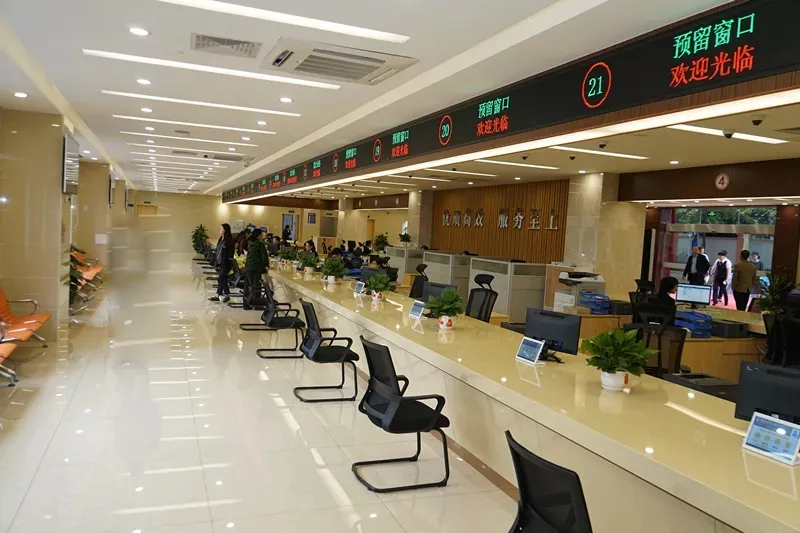
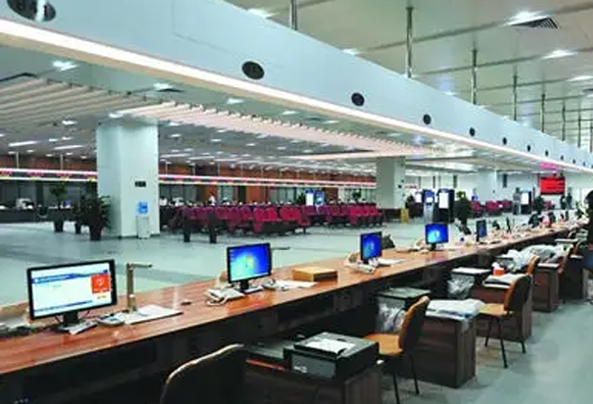
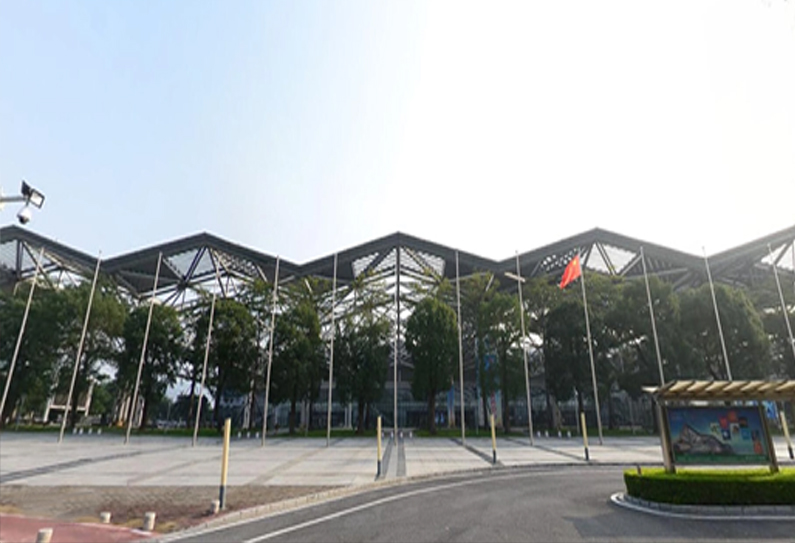
Public cultural facilities, such as municipal cultural centers, bear the dual responsibilities of serving massive foot traffic and maintaining a safe, hygienic environment. A large-scale public cultural center in East China, which integrates exhibition halls, reading rooms, and activity zones for all age groups, has long been plagued by outdated flooring issues that affected visitor experience and operational management. By upgrading to high-performance commercial-grade homogeneous through-colour PVC flooring, the center successfully achieved a comprehensive environment optimization. This case study explores how the tailored flooring solution addressed the unique challenges of public space operations.
Key Flooring Pain Points in Public Cultural Spaces
Prior to the renovation, the cultural center’s main areas—including entrance halls, exhibition corridors, children’s activity rooms, and reading zones—were paved with traditional terrazzo floors and ordinary commercial tiles. These surfaces failed to meet the rigorous demands of public use. Firstly, the terrazzo floors were prone to dusting and wear under long-term high foot traffic, resulting in a dull appearance and increasing cleaning workload. Secondly, ordinary tiles had poor slip resistance, especially when wet, posing significant safety risks to elderly visitors and children. Thirdly, the porous structure of the tiles made them easy to absorb stains from food and beverages, leading to stubborn dirt accumulation that was difficult to clean. Additionally, frequent maintenance and partial replacement of damaged floors caused disruption to public services and high operational costs.
Why Commercial-Grade Homogeneous Through-Colour PVC Flooring Was Selected
After in-depth market research and on-site evaluations, the cultural center’s management team partnered with Dajulong, a professional commercial flooring solution provider, and selected its commercial-grade homogeneous through-colour PVC flooring. This decision was driven by the product’s superior properties that perfectly matched the needs of public cultural spaces. The homogeneous through-colour structure ensures exceptional wear resistance, capable of withstanding high foot traffic without losing luster or generating dust. Its dense, non-porous surface prevents stain absorption, making daily cleaning simple and efficient.
Moreover, the flooring achieves an R10 slip resistance rating, maintaining excellent anti-slip performance even in wet conditions to protect the safety of all visitors. It also boasts a 99% antibacterial rate (compliant with the ISO22196 standard) and is made of environmentally friendly materials that meet national indoor air quality standards, ensuring a healthy environment for visitors, including children and the elderly. The management team verified the product’s reliability by inspecting Dajulong’s production base, reviewing relevant certification documents, and referencing successful cases in other public facilities.
Project Implementation and Remarkable Outcomes
Following one month of customized solution optimization and sample testing to adapt to the diverse functional zones of the cultural center, the center officially placed an order for 9,500 square meters of commercial-grade homogeneous through-colour PVC flooring. The construction team adopted a phased installation strategy, carrying out work during non-opening hours to avoid disrupting public services, and completed the full-area upgrade in 45 days, covering all key functional zones.
The upgrade delivered transformative results. The new flooring maintained a bright and uniform appearance despite high foot traffic, and its easy-to-clean properties reduced daily cleaning time by 42% and annual maintenance costs by 58%. Most importantly, the slip-resistant surface achieved zero flooring-related safety accidents within a year of installation. The environmentally friendly and antibacterial features also received widespread praise from visitors. This successful flooring transformation not only enhanced the cultural center’s service quality and operational efficiency but also set a benchmark for flooring upgrades in public cultural facilities.